ISEPP’s annual conference is a time for practitioners, academicians, educators, lawyers, and those who have been harmed by the conventional mental health system to gather together in solidarity. It is a time for strengthening our bonds, sharing our work, and reaching out to others who haven’t yet heard our message. Our mission is to critique mainstream mental health professional practices that are based on a medical model, and explore alternative ways of helping people in distress without abandoning the cherished principles of informed consent and self-determination.
Speakers will include:
David Healy, MD FRCPsych – Randomization Was Originally a Sign of Madness: What Are the Implications for Clinical Trials of Medicines?
Arnold Cantu, LCSW – A Descriptive Problem-Based Taxonomy for Mental Health: A Nonmedicalized Way Out of the Psychiatric Model
David Walker, PhD – The Yakama Twelve Virtues of ‘Good Growth’ and Their Relevance to Wellbeing
Angie Peacock, MS – Recreating a Life Outside Mental Health Patienthood
David Cohen, PhD & Joe Tarantolo, MD – Two Worlds In Dialogue: Comparing and Contrasting Perspectives between Psychiatry and Social Work
Posted onSeptember 27, 2021byRon|Comments Off on Peer Respite / Soteria Summit Sundays, Oct 3, 10, 17, 24, 31 2021
Creating Compassionate Alternatives to Systemic Interventions for People in Crisis & Distress
Brought to you by MindFreedom International and Rethinking Psychiatry.
The Summit is organized to promote and support Peer Respites and Soteria Houses as effective alternatives to existing mainstream responses for people in emotional distress or life-interrupting challenges. This free international, online, participatory conference will give people the inspiration, tools, resources, networks and ongoing support to bring a Peer Respite or Soteria House to their communities. Click here for printable PDF flyer.
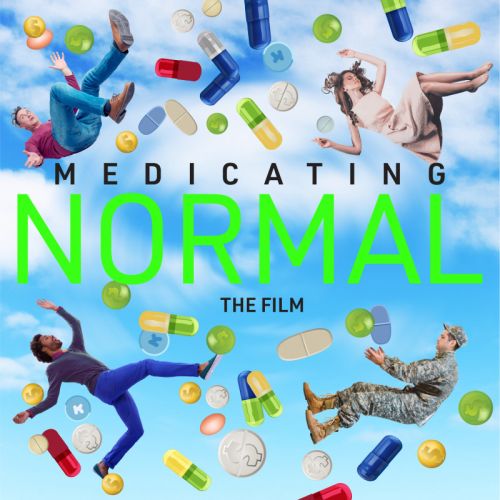
Join Rethinking Psychiatry for a virtual community screening of Medicating Normal, a 76-minute documentary film exploring our current mental health care system’s reliance on psychiatric drugs to deal with trauma, grief, and distress. There will be an interactive community discussion immediately after the film focusing on the structure of psychiatric power in the United States.
Accessibility: If you have any accessibility needs or need language subtitles, please contact us at: medicatingnormal@gmail.com
“Medicating Normal dares to challenge prevailing myths about how psychotropic medications work, or fail to, in our ongoing struggle to treat mental illness. It promises to spark a long-overdue national conversation on the growing problem of over-prescribing.”
– Anna Lembke M.D., psychiatrist, faculty Stanford University Medical School.
Medicating Normal follows the journeys of a newly married couple, a female combat veteran, a waitress and a teenager whose doctors prescribed psychiatric drugs for stress, depression, sleeplessness, focus and trauma. Our subjects struggle with serious physical and mental side effects as well as neurological damage which resulted from taking the drugs as prescribed and also from attempting to withdraw.
Cindi Fisher, a mental health advocate and activist catalyzed by the harm her 43 year old son experienced, and continues to experience today, at the intersection of racial and psychiatric oppression. Today she is dedicated to Whole Health Community Transformation. His tragic and resilient story, and her work and journey, can be found on her website RegroundingLove.com.
Braunwynn Franklin, mental health advocate, peer support specialist, and founder of 313 Network Solutions.
Dorian Taylor is a community member, a disability justice activist, and an abolitionist. They began advocating after their life has been shaped and molded by systemic traumas. They bring their motto “accessibility as an afterthought is the opposite of inclusion” into everything they do.
Alec Fisher is a community organizer working to end prison expansion in Washington while supporting incarcerated people and their families. After successfully defeating the construction of a new women’s prison in the state, Alec is working on a campaign to stop the expansion of Western State Hospital, a psychiatric confinement facility in Lakewood, Washington. Alec believes that disability justice and the prison-industrial complex are intimately tied and must be addressed together.
Keri Stanberry is a survivor of 35 years on medications and 7 years in and out of jail and mental institutions. She is an activist and NAMI state trainer for “Ending the Silence” and facilitator for NAMI’s signature programs. Keri has a certificate as a Community Health Worker, is a Washington state Peer Support Counselor, a Recovery Coach, and a medical assistant. She is a mother and lives in southern Washington.
Carolyn Green is the author of “LOCKED Behind (Hospital) Prison Doors 40-Days” sharing her traumatic experiences. Her active court cases in Washington State are aimed at creating new laws and changes that govern unlawful imprisonment (guised as civil commitment), to also improve the litigation process to protect the innocent. Carolyn graduated with a Bachelor of Science in Environmental Science, with a minor in Education from the University of Washington.
The Runaway House is a facility where people can live who have experienced violence in psychiatric care and are looking for rights-oriented support. The ex-user and survivor movement in Germany developed the concept and lobbied for government funding. Since 1996, it has been funded as a facility for homeless people seeking 24/7 support.
In this webinar, Kim Wichera will detail the history of ideas of the Runaway House, present the concept of the Runaway House in detail, and bring up for discussion the conflicts that arise from the everyday life of such a facility.
Kim Wichera [GER/PL] (they/them) is an artist based in Berlin, Germany.
Their works have been part of the Berlin Biennale, Biennial for Electro-Acoustic Music, CTM Transmediale Festival and TanzTage Berlin.
Kim works at the Runaway House “Villa Stöckle”, an anti-psychiatric facility in Berlin, and co-edits books on the subject [Gegendiagnose I, Gegendiagnose II].
They are a member of INTAR, an international network towards rights-based supports.
Recent public presentation–
UN Special Rapporteur Handover Dialogues – preparing communities for the future: rights-based approaches.
One tap mobile: +14086380968,,86337472062#,,,,*189623# US (San Jose) Dial-in: Find your local number: https://us02web.zoom.us/u/kO1Wa5MB5 Meeting ID: 863 3747 2062 Passcode: 189623
Posted onJune 23, 2021byRon|Comments Off on Respite Houses – Sunday, July 11, 2021
Afiya Peer Respite: Creating Alternatives to Hospitalization
Sunday, July 11, 2021, 10-12AM PDT
Afiya Peer Respite first opened its doors in August, 2012. It is the first peer respite in Massachusetts, and remains one of only a handful of respites of this kind across the country. The respite strives to provide space in which each person can find the balance and support needed to turn a difficult time into a learning and growth opportunity. Recently recognized in the World health Organization’s (WHO) “practice guidance document on community based mental health services promoting human rights and recovery,” Afiya consistently aims to center choice, dignity, and self-determination in all that is offered as it supports people to make meaning of their experiences and explore how they walk through the world.
This talk will focus on
The basic components that make ‘peer respite’ what it is
Important lessons learned as Afiya nears its first decade in existence
Impacts and outcomes of Afiya and peer respites across the nation
Sera Davidow
Sera Davidow is the Director of the Wildflower Alliance (formerly known as the Western Mass Recovery Learning Community) which serves as home to Afiya. She wrote the original grant proposal that helped bring Afiya into being, and has been involved through all its ups and downs ever since. Sera is also the primary author of, ‘The Peer Respite Handbook: A Guide to Understanding, Building, and Supporting Peer Respites,’ and co-produced the short film, “Afiya House,’ which serves as an educational tool on the concept of peer respites overall.
Posted onJune 10, 2021byRon|Comments Off on Soteria Israel – Sunday, June 20, 2021
Soteria Israel: A Personal & Professional Story
Soteria Israel
Sunday, June 20, 2021, 10-12 AM PDT
How a psychiatrist and a former patient turned psychology PhD student got recognition for Soteria Houses by the Federal Health Department.
How Israel’s Soteria Houses are similar to and different from the original Soteria.
Challenges and successes!
Meet the presenters:
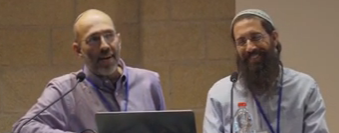
Avraham (Avremi) Friedlander, a clinical psychologist trainee at Sheba Hospital in Israel and a doctoral student researching alternatives to psychiatric hospitalization. He began his professional career with a personal spiritual / psychotic experience, 16 years ago, which made him want to make a change in the conventional method of treatment. Together with Prof. Pesach Lichtenberg, he established the first Soteria Houses in Israel and managed the Soteria House for men in Jerusalem. In addition, he is currently a member of a number of founding teams for additional alternatives in Israel and in thinking groups for changing the therapeutic paradigm within the conventional framework.
Prof. Pesach Lichtenberg the former Head of the Department of Psychiatry at the Hebrew University, headed a closed psychiatric hospital ward for 25 years before being fired. He is the founder and professional director of Soteria Israel, a non-profit organization currently operating three Soteria homes and planning more.
In every instance, people treated psychosocially did as well or better than those treated conventionally… – Robert Whitaker
Sunday, May 23, 2021, 10-12 AM PDT
Former employees from Soteria-Alaska will discuss key concepts of the highly effective Soteria model, developed in the 1970’s by Loren Mosher, as they were implemented in Alaska in 2009. The presenters will tell their stories of how they came to work at Soteria and their personal understandings of the concepts of “being with” and “contextual thinking,” thought by many to be the heart of the Soteria approach.
The presenters will
Give a brief overview of Soteria’s history and research.
Discuss their understandings of the Soteria approach using stories from Soteria-Alaska.
Share successes and challenges in opening and sustaining Soteria-Alaska.
Meet the presenters:
Susan Musante was the founding director of Soteria-Alaska and director of CHOICES, an alternative to conventional community mental health services directed and provided primarily by people who themselves had a “lived experience” with recovery. She is committed to education and advocacy for the development of voluntary, compassionate supports and services that work.
Matthew Ladner was an active employee of Soteria-Alaska from 2011 until the program ended in August of 2015. Matt has been active in the Peer Support Community for the last decade, with his experience at Soteria-Alaska providing the foundation of his continued work. Matt has went on and obtained his EMT license and continues to be involved in the Peer Movement within the State of Alaska.
Spencer Ladner is an experienced peer support provider and peer supervisor. He worked as a resident advisor at Soteria Alaska and oversaw peer bridging from state hospital to community while working for a peer run community mental health program. He is committed to seeing Soteria programs everywhere.
History and mission of Pathways Vermont and Soteria
Philosophy and Values
Collaboration~~Philosophy in practice
Jason Young~~Soteria Services Team Lead. Jason has worked in therapeutic communities for 10 years and has been a team lead at Soteria Vermont since it opened in 2015. Jason is committed to finding creative ways to foster transformation within ourselves and within our organizations.
Katie Bourque~~Acting Mental Health Services Manager, Soteria Services Manager. Katie Bourque (she/her/hers) lives in Burlington. She has worked with incarcerated or formerly incarcerated individuals for over a decade. Katie has experience in numerous residential settings, including Soteria Vermont. Katie has recently focused on supporting people experiencing first episode psychosis/extreme states/non-consensus reality to re-frame crisis as opportunity. Katie identifies with an array of lived experiences, including: psychiatric labels, coming off psych medications, trauma, substance use, parental incarceration, and loved ones attempting or dying by suicide. Katie is a proponent of cognitive liberty, harm reduction, and the peer support movement.
Cameron Senecal~~ Cam was a resident at Soteria House in 2017. He is now actively utilizing intentional peer support to aid in the recovery of one individual at a time.
Eryn Sheehan~~Peer Resident Staff and Former Resident of Soteria. Eryn has experienced extreme states since childhood and made it into her 20’s before spiraling into a catatonic state. She is committed to being here in this place we share bridging her world and consensus reality.
Understanding Anti-Racism & What It Has to Do with Rethinking Psychiatry
What is anti-racism about? How do we put it into practice, in our organization, our community and our movement for psych liberation? Join Rethinking Psychiatry for an in-depth facilitated study group of the book So You Want to Talk about Race, by Seattle author Ijeoma Oluo, over Zoom.
Meeting ID: 891 0688 3013 Passcode for audio/video: 2AibXa Passcode for audio only: 225522
One tap mobile +16699006833,,89106883013#,,,,,,0#,,225522# US (San Jose) +12532158782,,89106883013#,,,,,,0#,,225522# US (Tacoma) Dial by your location +1 253 215 8782 US (Tacoma) +1 408 638 0968 US (San Jose) +1 312 626 6799 US (Chicago) +1 646 876 9923 US (New York) Click here for international numbers.
We are NOT gathering at the Montavilla United Methodist Church building, due to COVID-19. We are so sorry we will miss you there.
For questions contact: RethinkingPsychiatry@gmail.com or message us on our Facebook Page.
Comments Off on 5 Wednesdays, 11/11-12/16/20: 6:00 – 7:30 p.m. PST
Rethinking Psychiatry is rethinking psychiatry, creating community, educating and activating for choices. We are part of a larger movement working to promote healing and choices in and beyond our mental health care system. We are an all volunteer organization made up of people with lived experience, professionals, family members, and other allies. We receive no funding from, and do not promote, any religious organization, government entity, corporation, or drug company.
RESOURCES
Harm Reduction Guide to Coming Off Psychiatric Drugs
Click here.
Published by the Icarus Project & Freedom Center
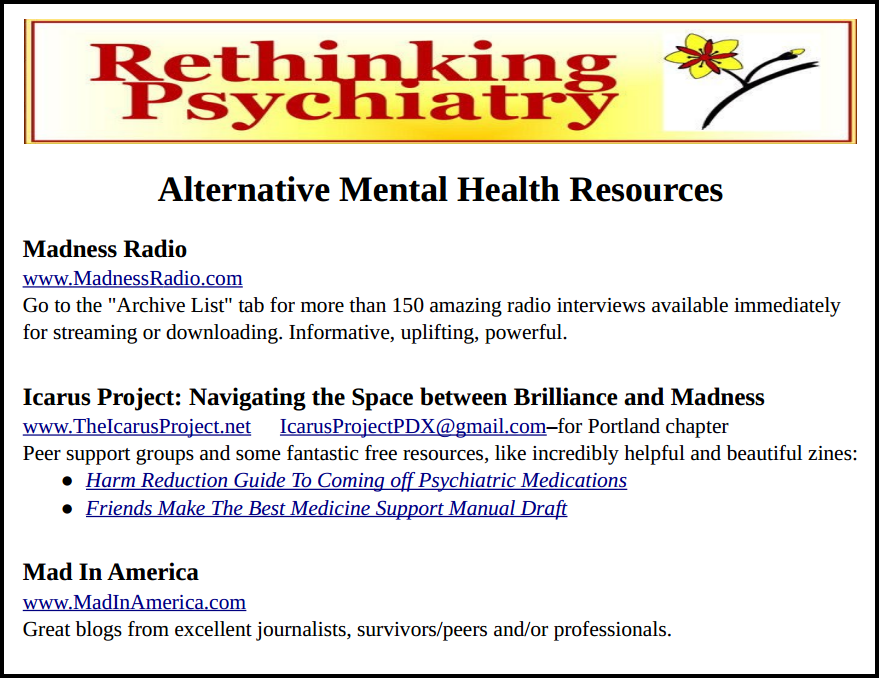
Rethinking Psychiatry's Alternative Mental Health Resource List